
Activation Functions play a critical role in helping Neural Networks process complex data. In modern deep learning systems, functions like ReLU, Sigmoid, Tanh, and Softmax are fundamental to improving model performance by introducing non-linearity.Let’s explore these Activation Functions and their practical uses without unnecessary complexity.
1. What is an Activation Function?
An Activation Function transforms a neuron’s linear output into a non-linear output. Without it, Neural Networks would behave linearly and fail to handle real-world, non-linear data such as images, text, or time series data.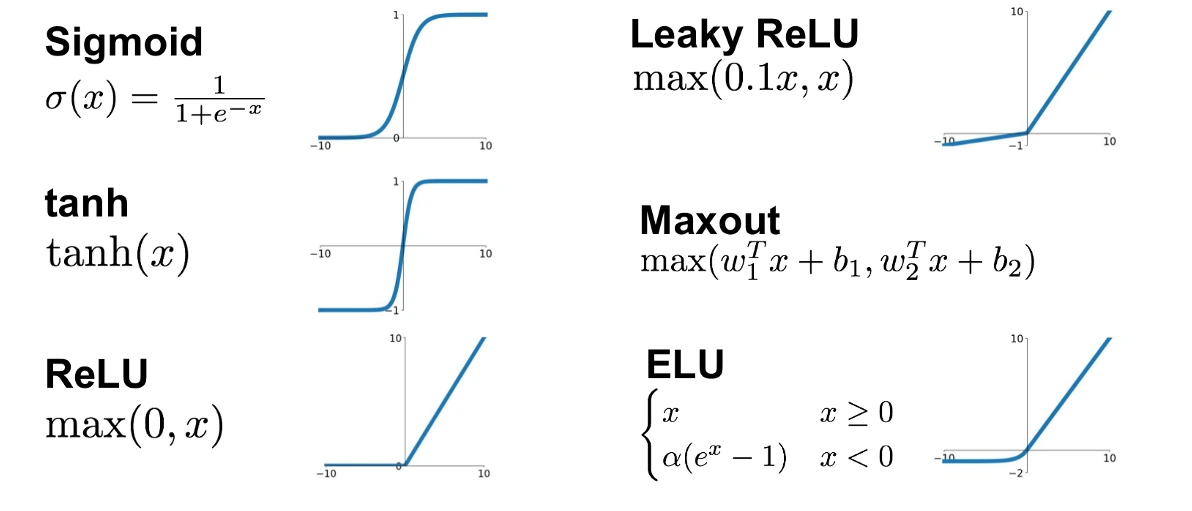
2. Key Activation Functions
a. Sigmoid Activation Function
- Formula:

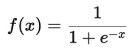
- Range: Output values between 0 and 1.
- Use Case: Commonly used for binary classification tasks where the output represents a probability.
- Pros:
- Smooth curve; ideal for probability-based outputs.
- Cons:
- Prone to the vanishing gradient problem, slowing training in deep networks.
- Outputs are always positive, limiting sparsity in models.
b. Tanh (Tangens Hyperbolicus)
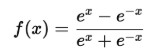
- Formula:

- Range: Output values between -1 and 1.
- Use Case: Preferred for hidden layers in deep networks because it centers outputs around zero, speeding up convergence.
- Pros:
- Symmetric around zero, leading to faster optimization.
- Cons: It is still susceptible to the vanishing gradient problem.
c. ReLU (Rectified Linear Unit)
- Formula:

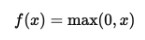
- Range: Output values 0 or positive.
- Use Case: The default activation function for most deep learning tasks, especially in image recognition.
- Pros:
- Simple computation (requires only a max function).
- Reduces vanishing gradient issues by maintaining a constant gradient of 1 for x>0x > 0x>0.
- Encourages sparse networks (neurons output zero for x<0x < 0x<0).
- Cons:
- Dying ReLU Problem: Neurons can get stuck at zero and stop learning.
- Not smooth at x=0x = 0x=0.
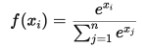
d. Softmax Activation Function
- Formula:

- Range: Converts outputs into probabilities that sum to 1.
- Use Case: Used in the final layer for multi-class classification tasks.
- Pros:
- Ensures all outputs are interrelated and sum to 1.
- Cons:
- Computationally expensive due to exponentials.
3. When to Use Each Activation Function?
- Sigmoid: For binary classification tasks where output represents probabilities (e.g., yes/no decisions).
- Tanh: For hidden layers where centered outputs speed up training.
- ReLU: Default choice for most tasks, especially in deep networks.
- Softmax: For multi-class classification in the final output layer.
4. Challenges and Modern Solutions
- Vanishing Gradients: Sigmoid and Tanh can make gradients very small, slowing training. ReLU and its variants (Leaky ReLU, Swish) help mitigate this issue.
- Dying Neurons: ReLU neurons can get stuck at zero, requiring careful initialization or alternatives like Leaky ReLU.
- Computational Complexity: Sigmoid and Softmax require exponentials, which can slow large-scale training. ReLU is computationally efficient.